


11/11/2026

Share:
11/11/2026
Share:

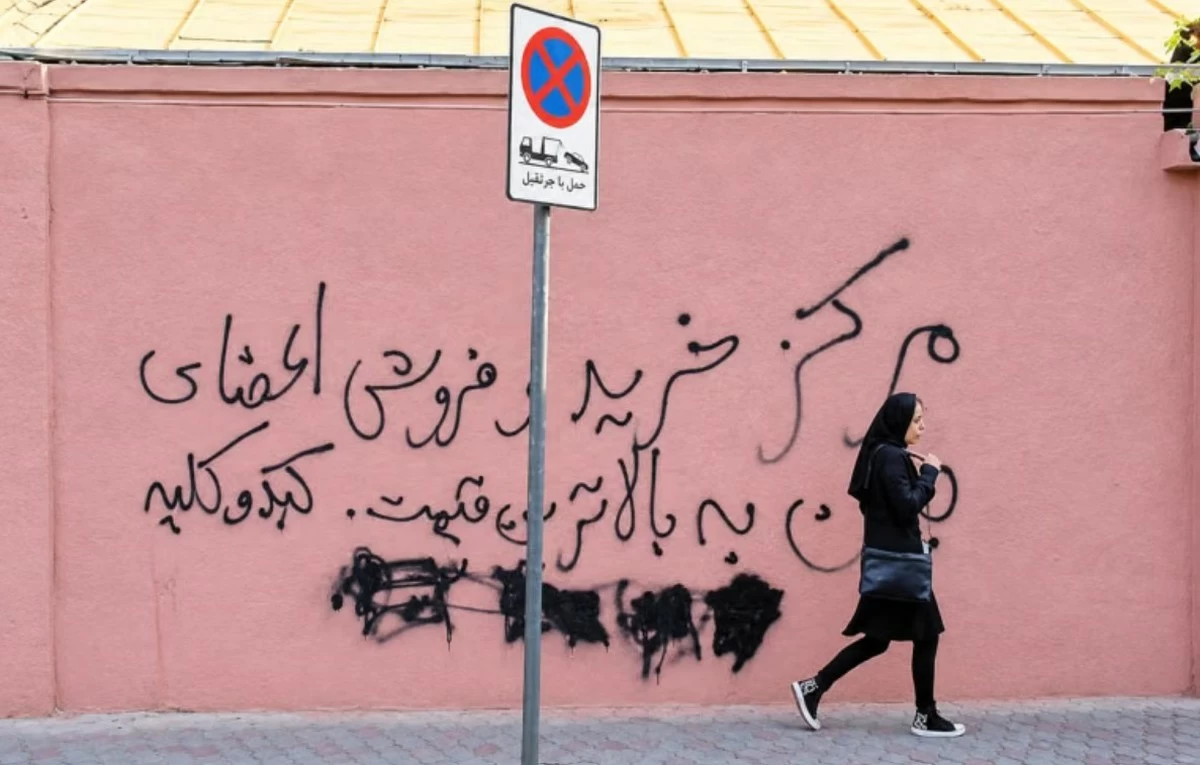
An Iranian woman walking past a wall advertising the sale of body organs.
TEHRAN, Nov 11: Iranian workers struggling with mounting debts and soaring living costs are reportedly offering kidneys, liver tissue and bone marrow for sale in desperate attempts to repay loans, settle outstanding payments and cover basic household expenses.
Iran’s labour-focused ILNA news agency, in a report published on Nov. 11, documented advertisements offering organs for sale on walls, metal doors and buildings along streets in central Tehran.
One area, Farhang Hosseini Street, widely referred to as “Kidney Street,” has reportedly become a gathering point for people seeking buyers. The location is close to a municipal medical facility and a charity that supports kidney patients.
According to ILNA, advertisements are no longer limited to kidneys, with some people also offering liver tissue, bone marrow and other body parts in an attempt to raise money.
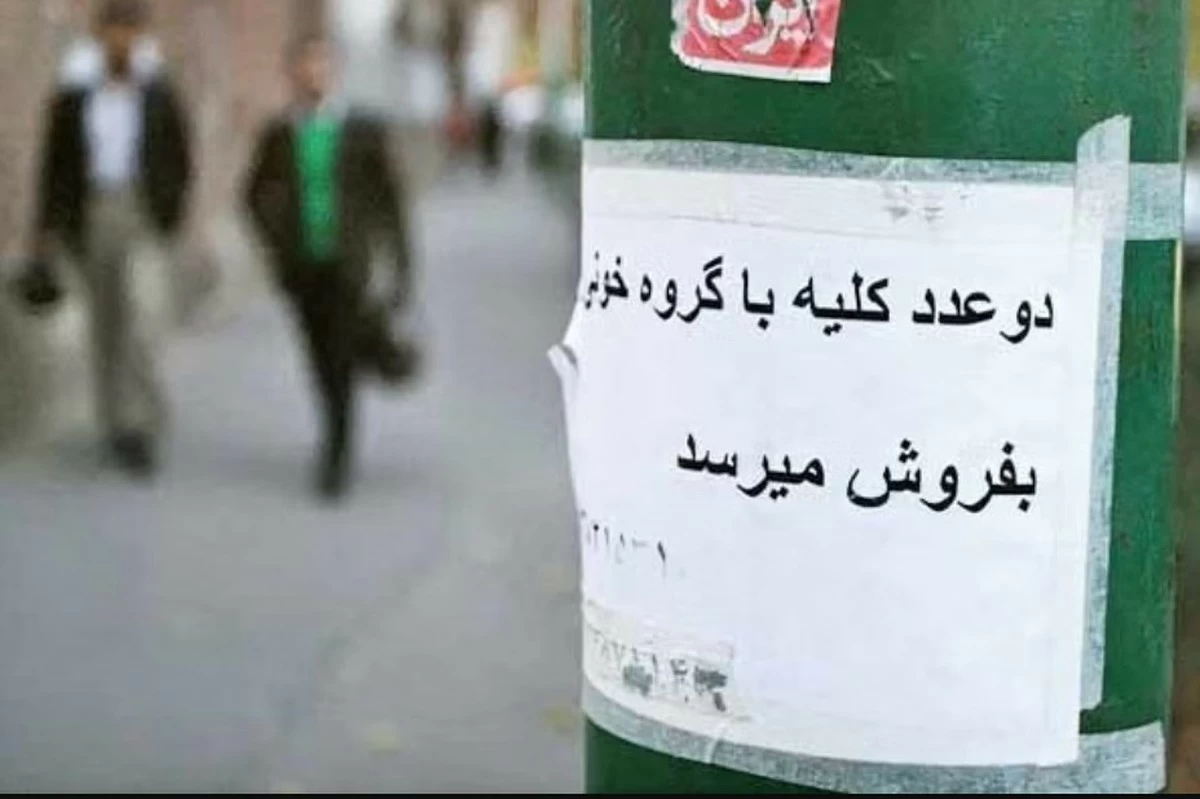
A flyer to sell body organs in Iran
Workers seek billions of rials
An employee at Sadra Hospital told ILNA that many of those advertising kidneys for sale were workers and people facing severe financial difficulties.
Asking prices reportedly range between 30 billion and 40 billion rials, although prices vary depending on blood type and other factors. Kidneys from donors with O-positive blood were reportedly advertised for lower amounts, while rarer blood groups could command significantly higher prices.
A 30-year-old motorcycle courier in Tehran told ILNA that he had rejected an offer for his kidney because the amount would not be enough to clear his debts. He said he was now seeking a substantially higher sum.
Another self-employed worker, aged about 58, said he needed money urgently to settle an outstanding check and was prepared to accept less than the usual asking price to find a buyer quickly.
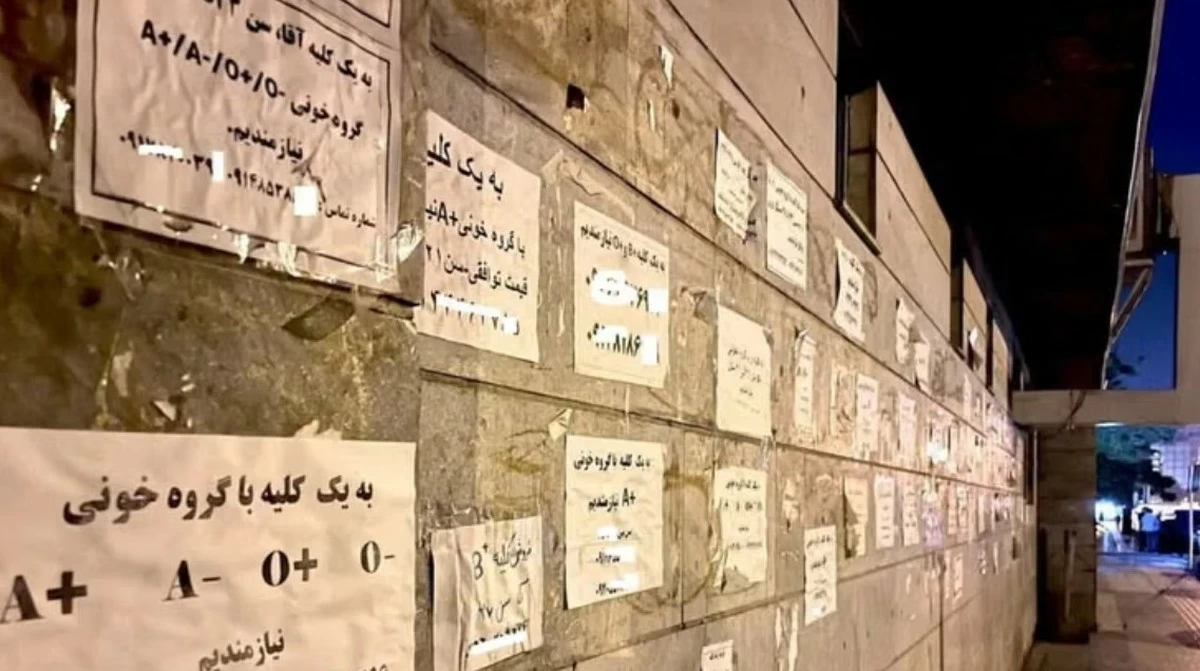
Flyers to sell body organs in Iran.
Multiple organs advertised
Some workers reportedly advertised several organs simultaneously, hoping to raise enough money to escape mounting financial pressures.
A 33-year-old construction worker told ILNA that he had advertised his bone marrow, kidney and liver tissue for sale, saying he possessed medical examination results and considered himself healthy.
Another worker reportedly advertised his kidney, liver tissue and a testicle for sale. After being informed that testicular transplantation was not performed in Iran, he reportedly said he was willing to sell whichever organ attracted a buyer and the highest payment.
The reports highlight the growing gap between workers’ incomes and the cost of basic living expenses.
According to ILNA, minimum-wage workers typically earn between 200 million and 300 million rials per month, including benefits, while independent labour activists estimate that a household requires around one billion rials monthly to meet basic expenses.
Workers employed on temporary or seasonal contracts face even greater difficulties because of unstable employment and incomes that may fall below the minimum wage.
Poverty and food insecurity concerns
The reports come amid growing concerns over poverty and food insecurity in Iran.
Ali Babaei Karnami, chairman of the parliamentary social affairs committee, said on Nov. 8 that around eight million people had fallen into absolute poverty and malnutrition, while up to 50 million more people faced difficulties affording food, according to the report.
Reports of Iranians attempting to sell organs to overcome financial hardship have surfaced repeatedly in recent years.
In March 2024, Tejarat News reported that young Iranians, including teenagers, were offering kidneys and bone marrow for sale to meet financial needs. Earlier reports also highlighted cases of Iranians travelling abroad in search of higher payments for kidney donations.
The situation has also affected access to healthcare. ILNA cited recent reports of retirees abandoning medical treatment because they could no longer afford it.
For construction workers, motorcycle couriers and others who depend on their physical health to earn a living, the decision to sell an organ could carry serious long-term consequences.
While such a sale may provide temporary financial relief, ILNA warned that it could ultimately undermine a worker’s health and ability to continue earning a living — leaving some of Iran’s most financially vulnerable citizens facing an even more uncertain future.