


25/10/2026

Share:
25/10/2026
Share:
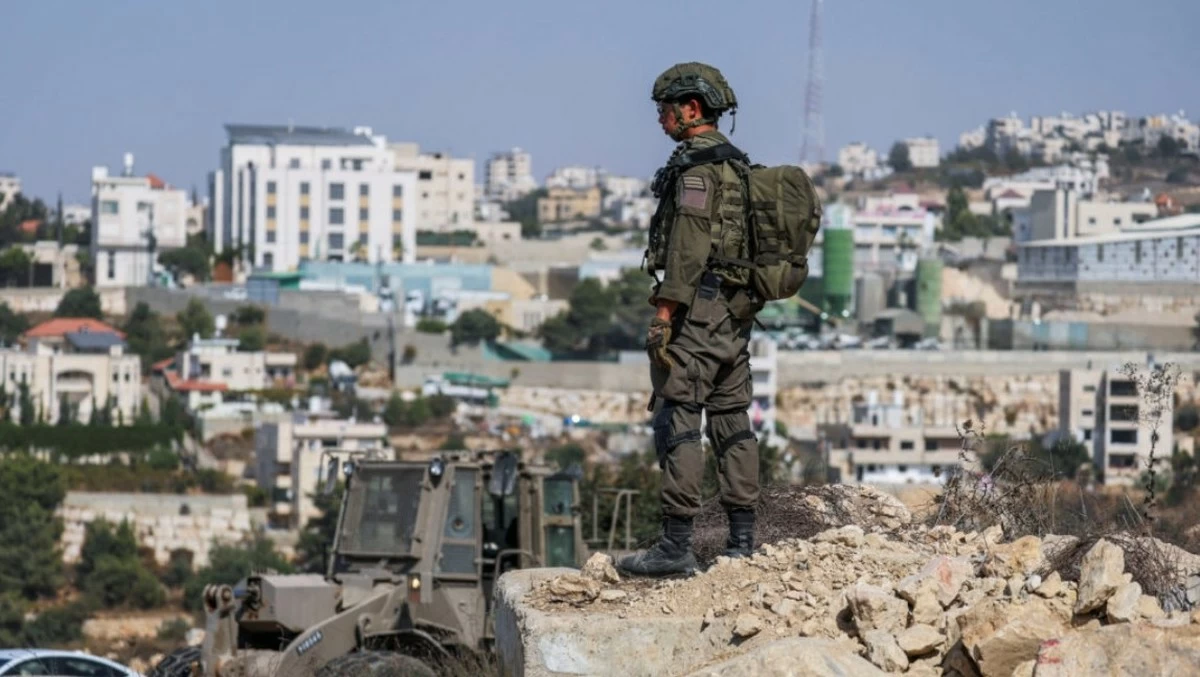

RAMALLAH / JERUSALEM, Oct 25: Israeli forces have taken over Palestinian homes in the occupied West Bank city of Hebron and converted them into military barracks and observation posts after forcing residents to leave their properties, while opposition leader Gadi Eisenkot has declared that Prime Minister Benjamin Netanyahu is no longer fit to lead Israel.
The developments come amid an expanding Israeli military operation in southern Hebron and growing political controversy over Netanyahu’s proposal to prepare the country for possible international economic and banking sanctions.
Israeli forces turn homes into military positions
Israeli troops occupied Palestinian homes in the Khallat Manna and Dahiyat al-Zaytoun areas of southern Hebron on Saturday, using the properties as barracks, according to the official Palestinian news agency Wafa, which cited local sources.
Residents in other neighborhoods were also forced to leave their homes, which Israeli forces subsequently used as observation posts, the agency reported.
The latest evictions follow the displacement of hundreds of families since Friday, amid extensive military raids, road closures and severe restrictions on movement.
Near Bethlehem, Israeli forces blocked dirt roads leading to the town of Tuqu and fired tear gas and stun grenades toward Palestinian vehicles using rough alternative routes, Wafa reported, citing Palestinian security sources.
The continued closures across Bethlehem and neighboring towns and villages have forced Palestinians to rely on unpaved roads to travel between communities.
Israeli forces sealed off Hebron and nearby Halhul on Friday following an attack by two Palestinians on an Israeli checkpoint. According to Israeli figures, two Israeli soldiers were killed and three others wounded. Israeli forces killed both attackers.
The Israeli army said its operation could continue for several days and would include house searches, interrogations and efforts to locate weapons and what it described as “terrorist infrastructure.”
The occupied West Bank, including East Jerusalem, has witnessed escalating Israeli military operations and violence by Israeli settlers since the start of Israel’s war on the Gaza Strip in October 2023.
Reported incidents include the killing and detention of Palestinians, home demolitions, attacks on mosques and vehicles, the destruction of farmland, restrictions on farmers accessing their fields and the displacement of Palestinian communities, alongside continued settlement expansion.
Eisenkot says Netanyahu has lost touch with reality
Israeli opposition leader Gadi Eisenkot on Saturday accused Netanyahu of pursuing policies that could undermine Israel’s economy and national security, declaring that the prime minister is “no longer fit” to lead the country.
Writing on X, Eisenkot, leader of the Yashar party, accused Netanyahu of turning his attention to “dismantling the Israeli economy for generations ahead” after what he described as the dismantling of Israeli society and the weakening of the army.
Eisenkot said Netanyahu’s recent statements demonstrated that he had lost touch with reality, accusing him of proposing preparations to disconnect Israel from the global financial system in response to the country’s deteriorating international standing.
“This is the madness of a man who is no longer fit to lead the country,” Eisenkot said.
His remarks followed Netanyahu’s announcement that he had requested an economic plan to prepare Israel for possible international economic and banking sanctions. The proposed preparations include alternative payment methods and the use of cryptocurrencies and blockchain technology.
Netanyahu expressed concern about potential sanctions, including restrictions affecting Israel’s banking system. He did not, however, explicitly announce plans to withdraw Israel from the global financial system.
Eisenkot characterized the proposal as a move toward economic isolation and warned that it could have far-reaching consequences for businesses, investors and ordinary Israelis.
'Bibicoin' proposal draws criticism
Eisenkot ridiculed the proposed financial strategy by calling it “Bibicoin,” combining Netanyahu’s nickname, Bibi, with the idea of using cryptocurrencies to address potential financial restrictions.
He questioned how Israeli technology companies serving international customers would receive payments or attract foreign investment if they were forced to bypass established international banking channels.
He also raised concerns about how foreign companies could acquire Israeli businesses if financial transactions became more difficult.
According to Eisenkot, the proposed approach could encourage Israeli companies to relocate overseas, undermine savings and investments, and prompt more citizens to leave the country.
He warned that the resulting economic damage could reduce employment opportunities and leave fewer resources available for healthcare and education, ultimately weakening national security.
“This is not an imagined nightmare scenario, but Netanyahu’s plan for Israel if he is reelected” on Tuesday, Eisenkot said.
“This is a real warning. Israel will not withstand another four years like these.”
Israeli media also reported criticism from an unnamed senior economic official, who questioned whether cryptocurrencies and alternative financial technologies could effectively circumvent banking sanctions. The official warned that merely proposing such measures could damage confidence in the economy.
Netanyahu warns US military aid will not last forever
Netanyahu has also warned that US military assistance to Israel cannot be taken for granted indefinitely, urging the country to prepare for a possible end to the aid and strengthen its own military capabilities.
His comments come amid increasing international pressure over Israel’s military campaign in Gaza, settlement expansion and violence in the occupied West Bank.
The United Kingdom and other Western countries have imposed measures against individuals and entities linked to Israeli settlements, while concerns have grown within Israel about the possibility of wider economic and diplomatic restrictions.
Political battle ahead of Knesset elections
The dispute between Netanyahu and Eisenkot comes ahead of Tuesday’s Knesset elections, with both figures seeking to shape the country’s political future.
Eisenkot urged Israelis to vote for “a better shared future,” presenting Netanyahu’s economic and security policies as a threat to the country’s long-term stability.
The two leaders remain divided over national security, economic management, relations with the United States and other Western countries, and the direction of Israel’s leadership.
Israeli politics also remains sharply polarized over responsibility for the security failures surrounding the October 2023 attack, the conduct of subsequent military campaigns, military conscription and the country’s economic outlook.
The election campaign is unfolding as Israel faces mounting external criticism and growing domestic debate over the economic, diplomatic and security consequences of its policies.