11/11/2026

Share:
11/11/2026
Share:

LONDON/NEW YORK, Nov 11 : An Iranian-linked operative held in a federal jail in New York allegedly used coded messages during telephone calls with family members to help coordinate a failed terrorist plot targeting a key British air force base used by the United States in its military operations against Iran, according to a new US indictment.
Mohammad Dawood Al-Saadi, a dual Iranian-Iraqi national allegedly associated with the Iran-backed Kataib Hezbollah group, is accused of directing two other individuals involved in the attempted attack on RAF Fairford, where US B-1 bombers were stationed.
According to details reported by CNN, the indictment was returned by a federal grand jury in New York on Tuesday. It identifies alleged Iranian military operatives as being behind the plan and names Al-Saadi alongside Mohsen Mohajeri, described as an operative of Iran's Islamic Revolutionary Guard Corps (IRGC), and another Iranian national, Mohammad Ali Al-Hassani.
Al-Saadi was already being held at the Metropolitan Detention Center in Brooklyn when he allegedly began coordinating the operation. He had been arrested earlier this year over separate allegations involving terrorist plots in the United States and attacks in Europe.
Prosecutors allege that Al-Saadi used coded language in telephone conversations with relatives to arrange financial transfers and communicate instructions to those involved in the British operation.
The alleged target, RAF Fairford in Gloucestershire, is a strategically important facility used by the US military, including American strategic bombers.
Seven men arrested in SeptemberThe alleged plot came to light in September when British police were alerted to three suspicious vehicles travelling towards RAF Fairford. Authorities arrested seven men on suspicion of involvement in a terrorist conspiracy.
The suspects were subsequently released under strict conditions after searches of the vehicles found no explosives. However, people briefed on the investigation told CNN that the plan allegedly involved turning the vans, which were loaded with fuel, into vehicle-borne improvised explosive devices.
Several of the suspects were rearrested in late October after British authorities assessed that there was a strong likelihood of Iranian Revolutionary Guard involvement in the alleged operation.
According to the US indictment, Al-Hassani allegedly organised the initial stages of the plot, arranging surveillance of the air base and paying unidentified individuals to obtain vans and barrels of fuel.
He also allegedly maintained contact with the drivers as they approached the facility, including when they encountered security personnel.
Coded messages and money transfersProsecutors allege that Al-Saadi used aliases and coded expressions when communicating with family members in Iraq. He allegedly instructed them to transfer money to support the operation and relay messages concerning what he referred to as "work" to Mohajeri.
Investigators said Al-Saadi had previously used the same expression when discussing terrorist attacks.
In a telephone conversation in July, cited in the court documents, Al-Saadi allegedly asked his sister whether their "old work" had been cancelled or merely suspended.
She reportedly replied that it had not been cancelled.
Alleged links to Soleimani and KhameneiThe indictment also details Al-Saadi's alleged connections with senior Iranian military and political figures.
Prosecutors claim he had worked closely with Qasem Soleimani, the former commander of the IRGC's Quds Force, who was killed in a US drone strike in January 2020.
According to prosecutors, Al-Saadi was considered close to Soleimani and was supposed to have been with him when the Iranian commander was killed.
He was also allegedly close to Iran's former Supreme Leader Ali Khamenei and had warned him three days before the United States launched its military campaign about a possible American strike against Iran.
Khamenei was killed in the opening wave of US-Israeli strikes in February.
Earlier allegations involving attacks in Europe and USAl-Saadi had already faced serious terrorism-related allegations before the latest indictment.
When he was initially charged earlier this year, US prosecutors accused him of helping coordinate attacks across Europe after the outbreak of the war. He allegedly monitored attacks through FaceTime calls with the perpetrators and subsequently produced propaganda videos using footage of the incidents, including arson attacks against Jewish institutions.
Prosecutors also accused him of attempting in April to recruit an individual to carry out potential assassination operations in the United States, including an attack targeting a prominent synagogue in Manhattan.
However, the individual he was communicating with was allegedly an undercover law enforcement agent. Al-Saadi was detained days later while travelling in Turkey.
Following his arrest, he allegedly told investigators that his responsibilities included media operations, psychological warfare, strategy and military intelligence for Iran and affiliated armed groups, which he collectively described as part of "the resistance."
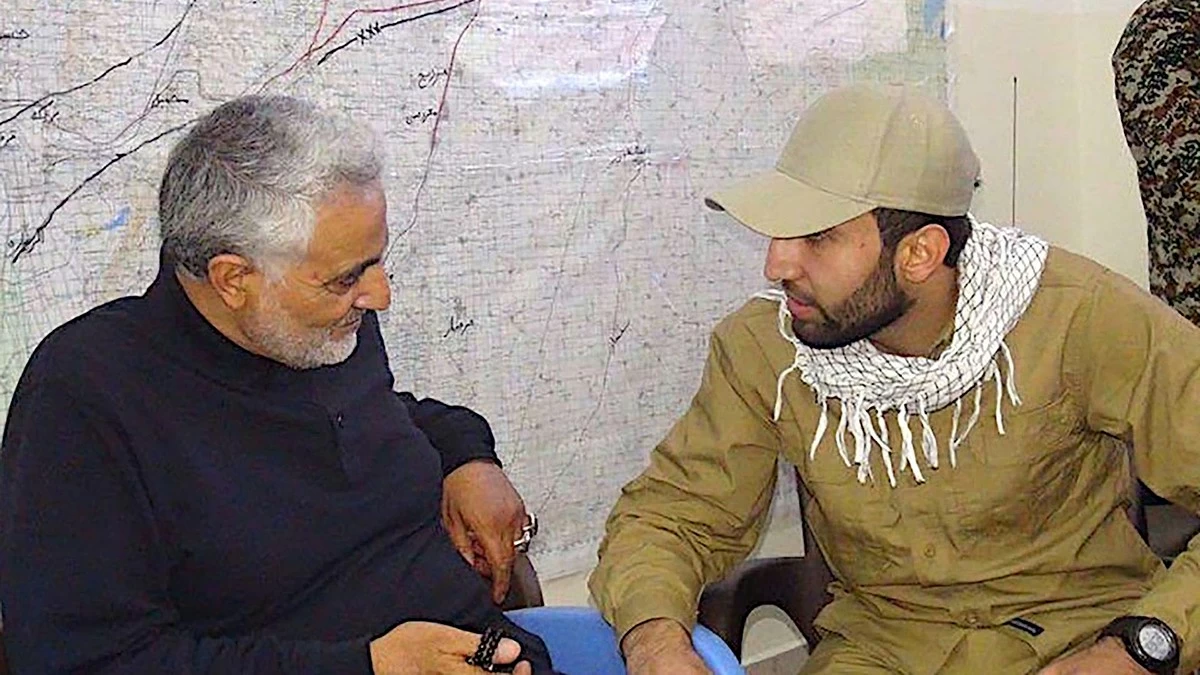
US investigators also recovered photographs from his electronic devices that prosecutors said showed him at intelligence facilities across the Middle East alongside Iranian military commanders and leaders of allied armed groups.
The latest indictment adds another serious allegation to the case, placing Al-Saadi at the centre of an alleged Iranian-linked operation targeting a strategically important US military facility in Britain.