


24/11/2026

Share:
24/11/2026
Share:
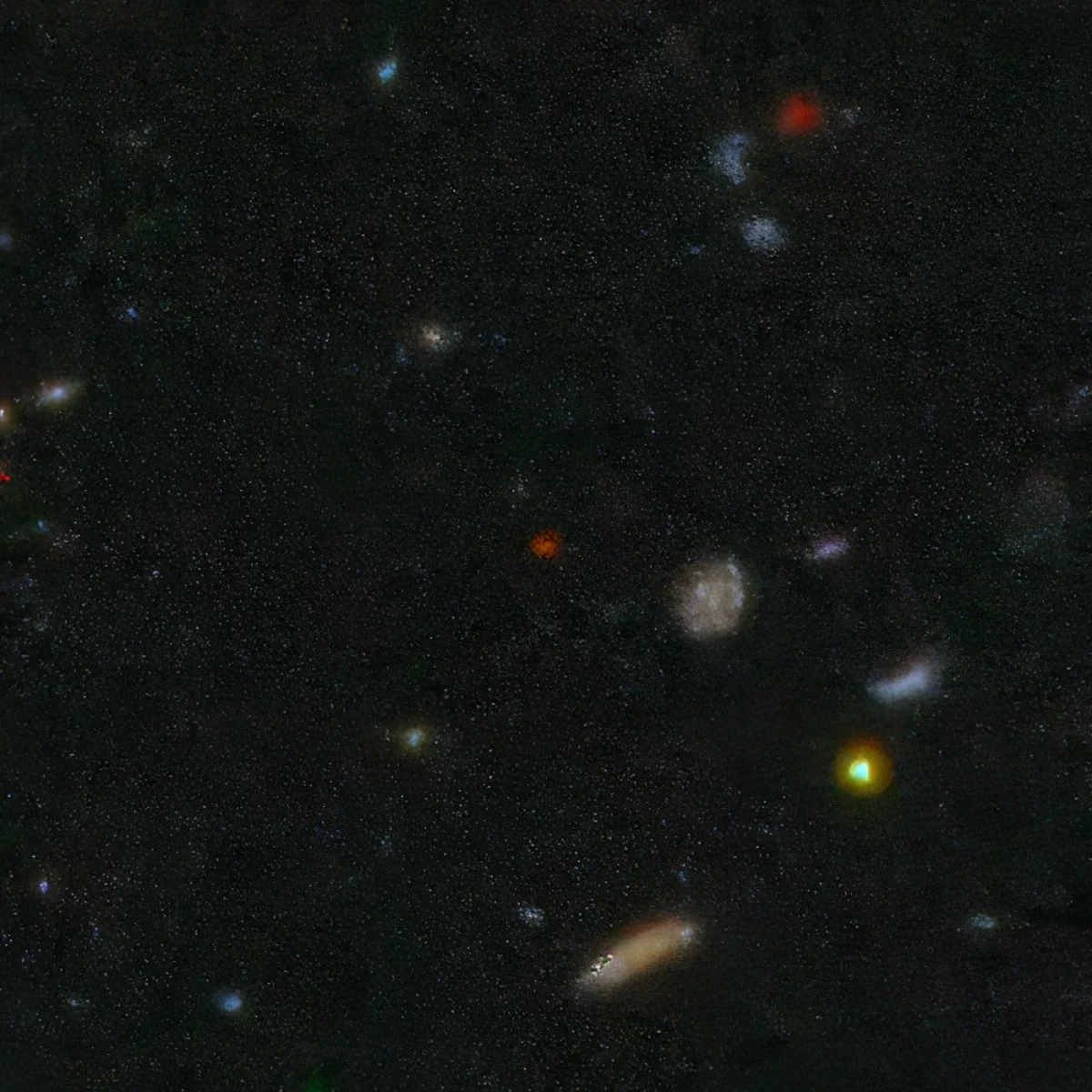

CAPE CANAVERAL, Fla, Nov 24, (AP): Scientists have discovered the most distant quasar yet, the core of a galaxy with a slow-chomping black hole at its center dating back to nearly the dawn of the universe. The quasar formed within 630 million years of the universe-forming Big Bang, a German-led team reported Tuesday. That's considered a very early development in the 13.8 billion-year history of the cosmos, and it smashes previous records.
"This time the leap in cosmic time is huge!” the European Southern Observatory’s Julien Wolf, who led the study, said in an email. "The previous two records each took us back by about 15 million years or less. This one takes us back by nearly 40 million years, the biggest advance in nearly a decade!” Wolf and his team spotted the quasar while digging through millions of observations made by the European Space Agency's Euclid telescope.
Launched in 2023, Euclid is surveying galaxies in an effort to shed light on the dark matter and dark energy that fill so much of the universe and keep it expanding. Finding a quasar so early in the universe is rare, according to Wolf. What makes this one even rarer, he said, is the massive size of its black hole, despite being such a relatively slow eater of everything around it.
Scientists are seeing it as it was 13.1 billion years ago - when the universe was less than 5% of its current age. Wolf nicknamed the quasar Dun Aonghasa after the prehistoric stone fort in Ireland's Aran Islands. His wife and daughter are Irish, and he was awestruck when they visited the fort - a frontier holding "the promise of a vast horizon still to explore,” just like this quasar.
His team's findings were corroborated by the Hubble and Webb space telescopes as well as other observatories on and off Earth. Thanks to Webb, scientists learned that the black hole powering this quasar is equivalent in mass to 360 million of our suns, an astounding amount so early in time. The final results appear in the journal Astronomy & Astrophysics.
"Dun Aonghasa gives us a new deadline” for the early universe, Wolf said. "About 630 million years after the Big Bang, its black hole had already grown to about 360 million times the mass of the sun. But how?” Their prowling of the cosmic dawn continues. "Honestly, the record could fall again in a few months or it could stand for years,” Wolf said.